
Agentics Driving Business Model Innovation
Thirdly, Agents are zero loyalty, customers. Agents are optimization machines, not brand loyalists, so they will consistently choose what is cheapest, best reviewed, and fastest, without emotional or habitual loyalty. This completely eliminates the advantage of platform loyalty programs (e.g., Booking Genius, Uber Gold).
As agents begin to treat platforms as one of many interchangeable data sources, platforms will lose pricing power, face pressure to lower fees to remain competitive in agent comparisons, and will
ultimately be pushed toward open APIs and standards, diluting any proprietary edge they may have. Similar disruption will happen in the app economy, which over the past 20 years has seen the emergence of somewhere between 7 and 10 million apps that provide
every conceivable digital service. Apple’s advertising catchphrase “there’s an app for that…” has made its way into popular culture and, in essence, has become true. But in the Agentic
economy, we will see something very different. We will see a shrinking of app stores that are browsed by users, and a growth of agent platforms/stores that will be accessed by higher-level
agents. The user will interact with their own personal/executive agent(s), and it is the executive agent that will interact, through an Agentic platform, with the wider agent ecosystem.
Similar disruption will happen in the app economy, which over the past 20 years has seen the emergence of somewhere between 7 and 10 million apps that provide
every conceivable digital service. Apple’s advertising catchphrase “there’s an app for that…” has made its way into popular culture and, in essence, has become true. But in the Agentic
economy, we will see something very different. We will see a shrinking of app stores that are browsed by users, and a growth of agent platforms/stores that will be accessed by higher-level
agents. The user will interact with their own personal/executive agent(s), and it is the executive agent that will interact, through an Agentic platform, with the wider agent ecosystem.
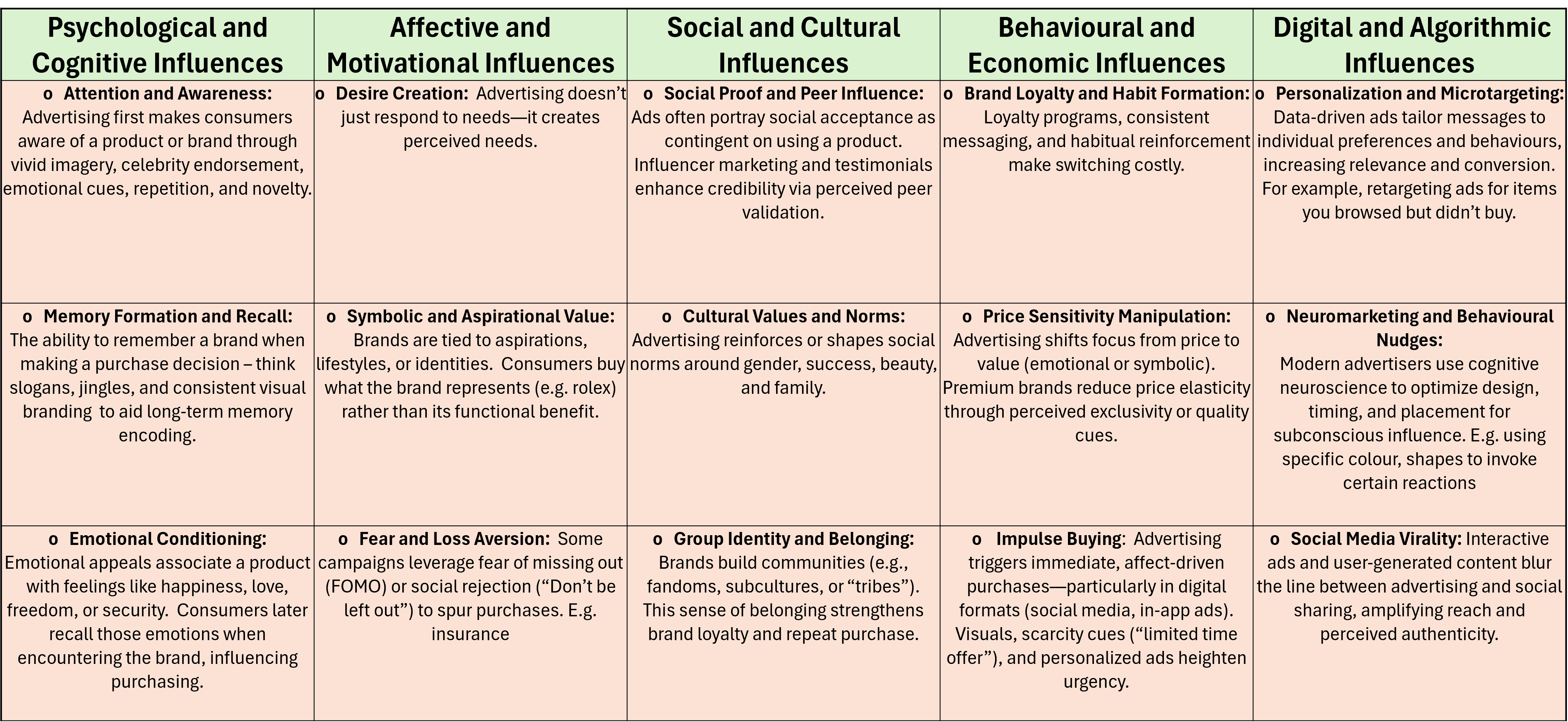
Figure 2 - Advertising Psychology Techniques
Click to enlarge
No battle is entirely one-sided, and the obvious platform survival strategies fall into two main areas.
Firstly, if you can’t beat ‘em, join ‘em. Every platform out there is currently looking at how to evolve their platform into one or more agents. This makes sense, but
the challenge that they face will be in innovating a business model that continues to be as lucrative. Platforms rely on network effects to create and capture value. In most cases, the
explicit transaction tax is placed on suppliers rather than on the buyer side of the platform. In the Agentic Economy, the barriers are relatively low for new platforms to emerge. Some will
continue to charge a transaction tax to the suppliers while others will attempt capture value by charging a ‘subscription charge’ to the buyer and reduced or zero transaction tax on the supplier.
This is likely to cause a price war between the two models – probably ending in a situation where the supplier transaction tax is greatly reduced, and the platform super-profits are
eliminated.
Exclusive lock-in with Suppliers: In the short term, platforms can try to develop incentives that limit the supplier’s ability to transact with other platforms or agents. This
could prove to be very expensive and/or of limited effectiveness. This lock-in could be via superior developer APIs that become essential infrastructure for third-party agents, rather than
end-user destinations. Or platforms might leverage verified reviews, fraud protection, or insurance as moats that agents cannot easily duplicate. Just as search engines once disrupted traditional
retail by enabling e-commerce comparison