
Letter from the Editor

As we enter 2026, the technology landscape is moving beyond the hype and past the experimentation phase into what some analysts call a "pragmatic reset." Gartner describes it as "hard hat work," where the margin for error has never been smaller, and the necessity for measurable ROI has never been higher.
This acceleration is backed by staggering investment. Nvidia’s latest revenue forecast serves as a bellwether for a sector that isn’t just growing but continuing to accelerate at an unprecedented clip. With hundreds of billions in visibility for AI infrastructure through 2026, the demand for high-performance compute is impacting every layer of the innovation stack.
This "AI supercycle" is placing immense pressure on the physical layer, fueling a massive resurgence in fiber demand. Modern AI-focused data centers can require up to 36 times more fiber than traditional racks to move data at the speed of light between GPU clusters, requiring a total rethink of Wide Area Network (WAN) hub designs and edge processing. Simultaneously, the energy required to fuel this growth is forcing a move toward advanced thermal management. With power now the defining intersection of AI growth and operations, data center efficiency and liquid cooling have become critical for sustainable scaling.
However, the speed of this evolution has also introduced a brand new class of threats. The risks were recently brought into sharp focus by the unprecedented autonomous attacks using Claude AI. This campaign marked a documented case of a cyberattack executed largely without human intervention, jailbreaking AI agents to perform reconnaissance at machine speed. These "agentic" threats necessitate a fundamental shift in both network and endpoint security. Organizations can no longer rely on legacy tool sprawl; they must move toward consolidated security and hyper-visibility to protect the digital supply chain, especially as regulations like the EU’s NIS2 Directive make transparency and resilience a legal mandate with operational deadlines throughout 2026.
In addition, the sheer complexity of these modern environments is driving a new era of network management. To handle the volatile traffic patterns of 2026, the industry is embracing Autonomous Networks. Guided by TM Forum’s maturity levels and collaborative Catalyst projects, service providers are moving toward networks that sense, think, and act. This is not just about automation, but about creating self-healing and intent-driven architectures that can optimize performance and resolve outages without human intervention.
From the race to accommodate the insatiable energy and fiber demands of a GPU-heavy world to the urgent need for a unified defense against autonomous, agentic cyber threats, the industry finds itself at a pivotal crossroads. Navigating these steep regulatory hurdles while simultaneously engineering the efficiency required for 2026 demands a radical departure from the status quo. By leveraging self-healing architectures and intent-based automation, the industry is transforming into orchestrating an intelligent, self-sustaining ecosystem. It is this unique synthesis—fostering rapid growth and innovation while building the inherent resilience to mitigate existential risks — and these converging trends are precisely what make this edition of Pipeline so very important.
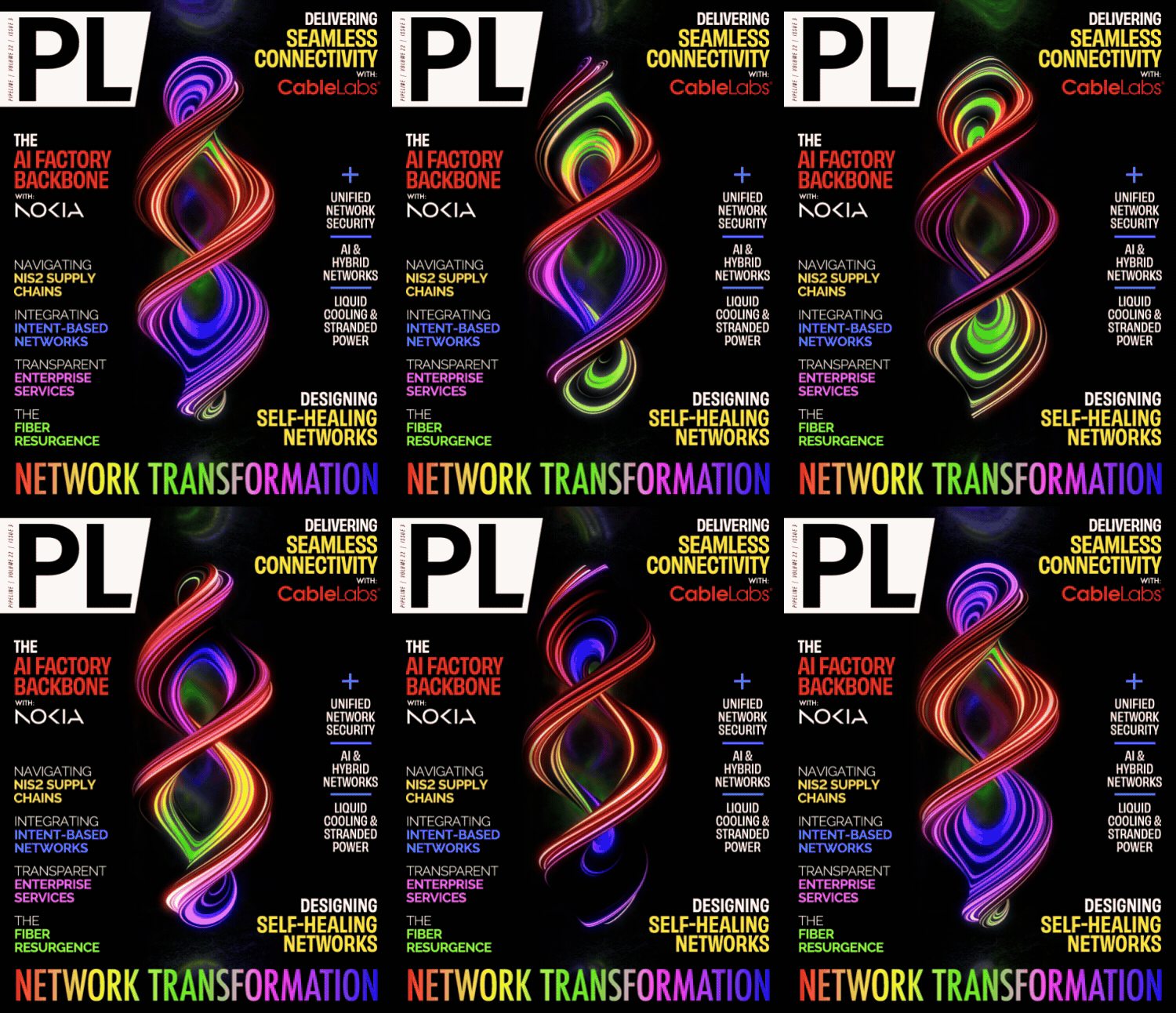
In this issue of Pipeline, we examine the state of network transformation. Nokia outlines AI-driven surge in network traffic, paralleling the video boom's impact on cloud ecosystems in The Quiet Backbone of the AI Economy. South Reach Networks notes how cloud and AI demand are creating a resurgence in fiber demand. Pipeline’s Mark Cummings, Ph.D., explores how AI traffic is reshaping hybrid network design and edge processing for faster speeds. AIRSYS describes how liquid cooling is addressing AI heat issues to reclaim energy to bolster data center efficiency. CableLabs presents a framework optimizing connections across access technologies for seamless experiences in Seamless Connectivity Services. Belden shows automated systems are reducing IT-OT integration complexities in digital overhauls in Intent-Based Networking. Zenture Partners addresses visibility hazards in multi-vendor setups amid digital demands in Enterprise Network Procurement. DE-CIX analyzes EU regulations mandating supply chain mapping for resilience and transparency in NIS2 & Supply Chains. Opengear explains centralized cloud vulnerabilities and alternative paths for network recovery in Self-healing Network Infrastructure. ZPE Systems proposes consolidated security to fix legacy tool risks and cut costs in Unified Endpoint Security.
All this, plus the latest enterprise IT and communications technology news and more.
We hope you enjoy this and every issue of Pipeline,
Scott St. John
Managing Editor
Pipeline