
Guide to DTW Ignite 2026
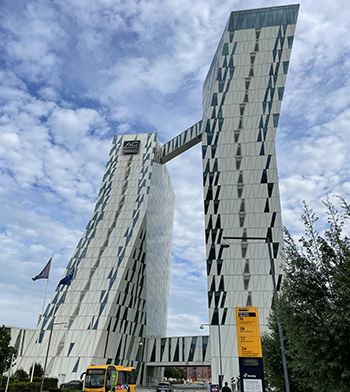
The global telecommunications sector has officially reached an operational tipping point where abstract multi-year transformation roadmaps must give way to deployable code. For nearly a decade, industry gatherings have been saturated with speculative slide decks detailing the theoretical virtues of cloud-native systems and automation. However, as the international technology ecosystem converges on Copenhagen’s Bella Center for TM Forum’s DTW Ignite 2026, the window for theoretical experimentation has closed. The current global operating climate demands a transition from cost-heavy experimentation directly into monetization and scale.
The overriding theme of this year's event, The Future. Faster., functions as a direct mandate for an industry grappling with a rapid explosion of data traffic and stagnant core revenues. In a recent executive briefing, TM Forum Chief Technology Officer George Glass outlined a fundamental, structural reality check: the conversation has permanently moved past whether an operator can theoretically adopt artificial intelligence. The focus of the global ecosystem is now firmly fixed on engineering the foundational blueprints of a completely autonomous, AI-native telco operating system". For communications service providers and enterprise technology leaders alike, skipping Copenhagen this year is no longer a matter of missing generic networking opportunities; it means actively falling behind a rapidly accelerating, heavily authenticated curve of production-grade innovation.
To navigate the massive physical footprint of the exhibition floor, specialized session tracks, and live engineering spaces, Pipeline has built this comprehensive executive guide. The following sections outline the most technically significant activities, high-velocity tracks, and collaborative showcases driving the agenda at DTW Ignite 2026.

Etiya


Etiya is providing CX-focused, AI-driven Digital Transformation with its award-winning product portfolio, and disruptive BSS solutions for Digital Brands from launch to
evolution.
The company has been recognized in the 2025 Gartner® Magic Quadrant™ and Critical Capabilities Report for AI in CSP Customer and Business Operations.
Structural Re-engineering Across Three Critical Mission Summits
In a decisive move to mirror the modern architectural demands of the digital enterprise, the TM Forum has completely restructured its flagship event around three distinct, deeply integrated pillars known as the Mission Summits. These specialized tracks strip out the traditional silos of network operations versus IT, forcing a comprehensive architectural convergence that is absolutely required to build an autonomous business model.
The first foundational pillar is the Composable IT and Ecosystems Summit, which focuses on the total eradication of monolithic, legacy software stacks in favor of agile, cloud-native modularity. This track goes directly to the heart of technical debt, illustrating how Open Digital Architecture, or ODA, has been fundamentally re-engineered to support plug-and-play AI microservices">. Operators can no longer tolerate multi-year integration timelines for basic billing or customer management updates. The case studies featured throughout this summit demonstrate real-world strategies for leveraging Open APIs to deploy modular software that enables rapid B2B2X ecosystem monetization.
The second pillar, the Autonomous Networks Summit, addresses the heavy operational shifts taking place as service providers transition from human-dependent workflows into intent-driven, closed-loop network autonomy. The dialogue in this track has advanced completely past localized script automation into the realm of Level 4 and Level 5 operational parameters across highly complex, multi-vendor environments">. Key technical focus areas include the deployment of advanced network digital twins, automated root-cause analysis, and federated artificial intelligence aimed at driving massive energy efficiency gains across radio access networks while drastically reducing total network downtime.